What Was Promised vs. What Was Done

What Was Promised vs. What Was Done

“No More Foreign Wars”

Promised:

Trump repeatedly said he would keep the United States out of foreign entanglements and end “endless wars.”

Done:

• Expanded drone strikes dramatically

• Authorized airstrikes in Syria

• Assassinated Iranian General Qasem Soleimani, nearly triggering a regional war

• Bombed Venezuelan vessels and openly threatened regime change

• Increased U.S. military presence in the Middle East at multiple points

⸻

“America First” (Not Billionaires First)

Promised:

Trump claimed he would fight for working Americans and stop elites from rigging the system.

Done:

• Passed a massive tax cut where the largest benefits went to corporations and the wealthy

• Oversaw record stock buybacks instead of wage growth

• Left working families with temporary tax cuts while corporate cuts were permanent

⸻

“Drain the Swamp”

Promised:

Trump vowed to eliminate corruption, lobbyists, and insider politics in Washington.

Done:

• Appointed more former lobbyists to senior roles than previous administrations

• Installed family members in powerful White House positions

• Used the presidency to enrich Trump-branded properties through official events

⸻

“Law and Order”

Promised:

Trump said he would restore respect for the law and uphold American institutions.

Done:

• Pressured the Justice Department to investigate political opponents

• Pardoned political allies and donors

• Encouraged disregard for court rulings and legal norms

• Undermined trust in elections without evidence

⸻

“Protect Social Security and Medicare”

Promised:

Trump repeatedly said he would not cut Social Security or Medicare.

Done:

• Proposed budgets that reduced Medicare spending

• Supported payroll tax changes that threatened Social Security funding

• Backed Republican efforts to privatize or weaken entitlement programs

⸻

“Support the Troops”

Promised:

Trump said he would be the strongest president for the military.

Done:

• Diverted military funds to build a border wall

• Reportedly disparaged fallen service members

• Politicized the armed forces for domestic purposes

⸻

“Bring Manufacturing Back”

Promised:

Trump claimed factories and jobs would return to American soil.

Done:

• Manufacturing entered recession before COVID

• Trade wars hurt farmers and manufacturers alike

• Jobs lost to automation and outsourcing were not replaced

⸻

“Fix Health Care”

Promised:

Trump promised a “better, cheaper” health care plan that would cover everyone.

Done:

• No replacement plan was ever produced

• Attempted repeatedly to repeal the ACA without a viable alternative

• Millions remained uninsured or underinsured

⸻

“Respect the Constitution”

Promised:

Trump swore to uphold and defend the Constitution.

Done:

• Attacked the free press as “the enemy of the people”

• Threatened to suspend parts of the Constitution

• Encouraged efforts to overturn certified election results

⸻

“Unite the Country”

Promised:

Trump claimed he would bring Americans together.

Done:

• Governed through division and grievance

• Used race, immigration, and fear as political tools

• Deepened distrust in democratic institutions

⸻

The Pattern

Trump’s presidency was not defined by broken promises due to complexity or compromise.

It was defined by saying one thing and doing the opposite — often loudly, often proudly.

⸻

“Strong Leadership” (Also Known as Mandatory Praise Night)

Promised:

Trump promised strong, decisive leadership surrounded by “the best people.”

Delivered:

A federal government run like a televised loyalty audition.

• Cabinet meetings looked less like policy discussions and more like an episode of America’s Got Talent: Authoritarian Edition

• Secretaries took turns thanking him for the honor of being allowed to sit at the table

• Praise was not optional. It was survival

• Facts were negotiable. Ego was not

• Competence was secondary to enthusiasm

At one point, senior officials were practically tripping over each other to say, “Thank you, Mr. President, for your historic, visionary, unmatched leadership.”

If you closed your eyes, you couldn’t tell whether you were watching the U.S. Cabinet or North Korean state television.

This wasn’t confidence.

It was insecurity with a microphone.

⸻

The Cult, Not the Cabinet

In a healthy democracy, advisors challenge the president.

In Trump’s White House, they praised first, governed second.

• Tell the truth? Fired.

• Disagree politely? Labeled “weak” or “disloyal.”

• Break the law for him? Congratulations, you’re “very brave.”

The message was crystal clear:

Your job was not to serve the country. Your job was to serve the man.

⸻

When leaders demand flattery, bad news stops traveling upward.

Warnings get buried.

Reality gets filtered.

That’s how you get:

• Policy made on impulse

• National security decisions driven by cable news

• A government afraid of telling its boss he’s wrong

Strong leaders don’t need applause.

Authoritarians do.

⸻

We didn’t watch a president command respect. We watched grown adults audition for approval.

And the scary part isn’t that it happened.

It’s how many people are pretending it was normal.

⸻

I honestly feel sorry for many of our neighbors who voted for Trump—not out of condescension, but out of empathy. They were promised prosperity, safety, and stability, and their hopes were real and understandable. Instead, we all lived through chaos, division, and a constant sense that the country was one impulse away from crisis. Our communities weren’t made safer, our costs didn’t go down, and our lives didn’t suddenly get easier. What was sold as strength turned out to be spectacle; what was promised as protection delivered uncertainty. Being misled is not a moral failure—but pretending the damage didn’t happen is how we ensure it happens again.

At Least We Owned The Libs…

AT LEAST WE OWNED
THE LIBS

by GINNY HOGAN

Sure, it was a huge bummer that they cut funding for fixing the streets in our town. We enjoyed going places. But, overall, it’s worth it for the tax cuts we expect any day now. I mean, at least we owned the libs. Libs love streets. Did you see that video of Trump dumping shit on libs marching in the streets? Got ’em!


Ah, dang. Groceries have never been more expensive. We really thought this was something Trump might be able to help us with. But the high cost of food is worth it so a transgender teen in Idaho can’t use the school locker room. Libs aren’t cheap to own, but the price is more than fair.


Wait, when they said they were going to dismantle the Department of Education, they were talking about, like, America’s Department of Education? The one that funds our schools? Shoot. Our kids will have to learn how to read from the back of cereal boxes. But at least the cereal doesn’t have Red Dye No. 2 in it. And as we all know, the libs are OBSESSED with Red Dye No. 2. Owned!

Owning the libs all the way into a measles outbreak? That’s called “keeping the narrative spicy,” and it’s NOT a bad thing.


Yes, we liked that restaurant. Yes, it would have been better if they hadn’t shut down, but half their staff got deported, so what are you going to do? At least all those dumb woke libs in LA and New York can’t eat at this Mexican restaurant in Columbus, Ohio, either.


Our cousin lost his soybean farm. We really thought the tariffs would help American farmers, but it turns out other countries just stopped buying our stuff. Stupid woke CCP. But you know what you can’t repossess? An ideological victory. I mean, except every four years, when the presidency changes hands. Whatever. The libs have been owned so hard they don’t even know what hit ’em.


So when they said they were axing “federal government jobs,” we just assumed they meant jobs in MARXIST blue cities. This is an unwelcome surprise. But you know what? This annoying liberal girl I knew in college cried in her IG story on election night. And we’ll ride that all the way to the bank (where they’ll hopefully give us a loan).


The water’s been brown for three weeks. It’s a drag, but I bet there’s an Ivy-educated lib walking around Bushwick in a really bad mood right now. So it’s totally worth it.


Huge bummer: Our health insurance got cut. We kept hearing Republicans say that lazy good-for-nothings and illegals would stop receiving Medicaid checks every month. And we thought, “Yeah, we’re on Medicaid, but they never send us checks.” So we didn’t think it would affect us. Anyway, in the meantime, we’ll take comfort in the knowledge that the libs probably can’t see doctors either. I mean, all the hospitals in rural areas are shutting down, and coastal elites are famously concentrated in… look, whatever, they’ve been owned, okay?


All right, well… we can’t pretend this has turned out the way we imagined. But you know what? We heard that a gender studies department in Vermont had its funding reduced by 12 percent. And the video of our great president wearing a crown I posted to my knitting group’s Facebook page really pissed off all the libs on there. And that, in the end, is what matters most.

NO KINGS — Not Left, Not Right, But American

One of the saddest things I saw after yesterday’s rally was how many people commented on my previous post without actually reading it. They skimmed a headline, jumped to a conclusion, and then piled on with their pre-made categories: Democrat vs. Republican, liberal vs. MAGA. That’s exactly the kind of thinking NO KINGS is here to break.

A graphic featuring a crown crossed out with red brush strokes, accompanied by the bold text 'NO KINGS' beneath. The design symbolizes opposition to monarchy and concentrated power.

NO KINGS isn’t a partisan slogan. It’s not a clever way to score points against the other team. It’s a simple, stubborn declaration: we are not a monarchy. Not now. Not ever.

What NO KINGS means

Say it plainly: the movement isn’t about which party holds power. It’s about refusing to hand our institutions and our country over to a personality or an ideology that demands unquestioning loyalty. It’s about insisting that power be accountable, that leaders be temporary servants, not permanent rulers. The Founders gave us a republic for a reason — because concentrated, unaccountable power breeds corruption, violence, and the erosion of freedom.

Don’t fall for the trap

I saw people say they’d be okay with a king — as long as that king hates the same people they hate. That’s exactly the trap. Choosing a monarch who shares your list of enemies feels satisfying in the moment, but it hands the tools of oppression to someone else. When you cheer a leader because they attack your foes, you tacitly accept that the leader will also be able to turn those tools on anyone who becomes inconvenient.

Fear is a tool

Don’t be afraid. That’s the other play in this game: scare you into submission. They want you terrified of ANTIFA, painted as the boogeyman. So let me ask plainly — who stormed the Capitol on January 6? Was it Antifa? Or was it a mob that believed it was justified by a leader’s lies?

Being anti-fascist is not a crime; it’s an ethic. If opposing authoritarianism and protecting democracy makes you “anti-fascist,” then yes — I’m proud to stand on that side. My grandfather fought fascists in World War II. He didn’t pick sides for sport; he stood against a system that crushed dissent, stamped out rights, and murdered millions. Does that make him the enemy of anyone who defends tyranny today? It shouldn’t.

A painting depicting a man standing and speaking in a public meeting, surrounded by attentive audience members, showcasing a moment of civic engagement.

What we stand for

NO KINGS is for people who believe in democratic norms: the rule of law, free and fair elections, a free press, peaceful transfer of power, and institutions that limit abuse. It’s for those who will not accept threats, intimidation, or lies as the currency of governance. It’s for those who will call out abuses whether they come from the left or the right.

If you showed up at the rally, you probably felt that: a cross-section of Americans fed up with cults of personality and unwilling to trade a fragile freedom for the illusion of tribal safety. If you read the signs and listened to the speeches, you heard families, veterans, students, and workers saying the same thing in different words: No one is above the law. No one gets to remake the country in secret or by force. No leader is owed worship.

A black flag featuring the text 'We the People' at the top, followed by the phrase 'NO KINGS IN AMERICA' in bold, colorful lettering, with stars and stripes design at the bottom, set against a green outdoor background.

Plain asks

  • Read before you shout. If you want to oppose a movement, oppose it on its terms.
  • Stop pretending democracy is mere partisanship. It’s a fragile contract we renew every day.
  • Don’t be fooled into loving a strongman because he roughs up your enemies.
  • Be unafraid to be anti-fascist. Opposing tyrannical methods is patriotism.
  • Show up, speak up, and insist on accountability from every side.

NO KINGS is a reminder and a covenant: we will not hand our republic to a crown, whether it’s literal or figurative. We will argue. We will protest. We will vote. We will hold leaders to account. Not now. Not ever. No kings.

Rejecting the ‘Blue Scare’ in Local Politics

A Local Call to Reject the “Blue Scare”

As Dover’s Ward 3 councilor I want to expand on a warning that should concern every resident who cares about good government and a healthy civic culture. Our nation has a long and painful history of allowing fear to do the work of reason — and we are beginning to see echoes of that history here and now.

Fear as a Political Weapon

Throughout American history, fear has been used to short‑circuit debate and chill dissent. The early 20th‑century Red Scare and the McCarthy era in the 1950s are stark reminders of what happens when suspicion and paranoia replace facts and open discussion. People lost livelihoods, reputations, and even basic freedoms because they were labeled “un‑American” for asking tough questions or holding unpopular views. Those episodes weakened our democracy and left scars that lasted generations.

A New Scare: The “Blue Scare”

Today we are witnessing a different but related phenomenon: a “Blue Scare.” Rather than accusing citizens of communism, some political actors and media outlets now demonize people for being Democrats, liberals, progressives, or for not being sufficiently aligned with the MAGA movement. Support for causes like affordable housing, public education, or healthcare becomes a reason to brand a neighbor as disloyal or dangerous. The result is the same: conversation collapses into caricature, and complex policy debates give way to tribal shaming.

Why This Matters Locally

This isn’t just a national story; it plays out in our city meetings, on neighborhood sidewalks, and across the wards of Dover. When we allow partisan fearmongering to set the tone, we undermine the very processes that produce practical solutions. Projects stall. Trust erodes. People stop attending meetings or offering ideas because they fear being attacked for their political identity rather than critiqued for their proposals.

I see better outcomes when residents engage respectfully. In Ward 3, when neighbors come together—regardless of party—we accomplish real things: potholes get fixed, housing gets built, fields get finished. Those achievements are the product of conversation, compromise, and the willingness to put community needs above partisan point‑scoring.

How We Can Resist the Scare

  • Keep the focus on policy: Debate the merits of proposals — costs, benefits, trade‑offs — rather than attacking the people who propose them.
  • Call out fearmongering: When you hear rhetoric meant to frighten or dehumanize, name it. Remind people that our democratic duty is to listen and to challenge ideas, not to silence or ostracize neighbors.
  • Build cross‑partisan relationships: Reach out to people who vote differently. Attend events, volunteer on local projects, and find shared priorities that transcend party labels.
  • Model civil discourse: As elected officials and as citizens, we set the tone. Use facts, cite sources, and treat opponents as fellow residents, not enemies.

A Local Pledge

I believe Dover succeeds when we refuse to let fear guide our politics. I pledge to continue inviting residents from every background and political stripe into conversation. My priority as a city councilor is pragmatic problem‑solving—roads, housing, schools, public safety—that improves daily life for everyone.

The Red Scares of the past are rightly remembered as national embarrassments. If we are honest with ourselves, we already see the outlines of a contemporary shame: a Blue Scare that trades substance for spectacle and loyalty tests for policy discussion. Let’s refuse to repeat that mistake.

Join the conversation, share your concerns, and help build the pragmatic, inclusive Dover we all want. Together, we can ensure our disagreements stay rooted in policy and purpose — not in fear or exclusion.

How Italy’s Political Violence Mirrors U.S. Extremism

Italy’s Years of Lead (late 1960s–1980s) were marked by sustained political violence—bombings, kidnappings, assassinations—by both far-left and far-right militants. The period left deep scars on Italian democracy and institutions. The United States today faces its own surge in politically motivated violence, rising extremist networks (predominantly on the far right), intense polarization, and institutional strain. Drawing lessons from Italy can help the U.S. avoid escalation and protect democratic norms.

What’s happening now in the U.S.

  • A rise in right-wing violence: Research and law-enforcement reporting show increasing activity by white supremacist, anti-government, and militia groups. The FBI and DHS have repeatedly identified domestic violent extremists—especially racially motivated violent extremists and anti-government actors—as among the top domestic threats. 
  • High-profile political violence: Charlottesville (2017) and the January 6, 2021, Capitol attacks are stark examples of organized political violence and the willingness of politically motivated mobs to use force. 
  • Rhetoric and radicalization: Prominent conservative activists and media figures (like Charlie Kirk) have used combative, often dehumanizing rhetoric. In NO WAY does this justify his killing – BUT- Scholars link such rhetoric to environments that can facilitate radicalization even when direct causation is hard to prove. Public figures’ statements that stoke grievance and delegitimize opponents lower norms and can embolden violent actors. 
  • Media and accountability pressures: Major media organizations have fired or disciplined hosts and contributors after controversies over comments about public figures or political matters, reflecting both commercial pressures and debates about editorial tolerance. Some critics argue media responses have been inconsistent, fueling perceptions of selective accountability. 
  • Use of federal forces in cities: Debates over federal deployments—whether federal agents at protests or National Guard activations—have heightened tensions, with critics warning such moves can escalate conflict or be perceived as politicized if not transparently justified and overseen.

Comparing to Italy’s Years of Lead: parallels and limits

  • Parallels: Polarization, media amplification, organized extremist networks, and institutional stress are common factors. Italy’s descent shows how unresolved grievances and state overreach can create feedback loops of violence and delegitimation. 
  • Limits: Italy’s violence involved more sustained, symmetric campaigns by both left and right, large-scale bombings, and Cold War geopolitics that have no direct modern U.S. equivalent. The U.S. context is shaped by social media radicalization, different political institutions, and a mostly far-right profile of violent groups today.

Risks to watch

  • Normalizing dehumanizing rhetoric from public figures, which lowers barriers to violence. 
  • Selective enforcement or politicized use of federal force, which undermines trust. 
  • Media incentives that amplify polarizing content and inconsistent accountability, which reinforce grievance narratives. 
  • Online ecosystems that speed radicalization and facilitate operational planning.

What Can We Do in Dover and New Hampshire?

  • Community violence prevention: Invest in local organizations, crisis-intervention teams, and intervention specialists who can mediate disputes and identify early radicalization signs. 
  • Robust civilian oversight: Create empowered civilian review boards and independent investigators for incidents involving political actors. 
  • Prosecutorial independence and ethics: Strengthen rules and oversight to ensure local prosecutors act impartially on politically sensitive cases. 
  • Education and media literacy: Expand programs in schools and communities to build critical thinking and resilience against disinformation. 
  • Local reintegration services: Fund job training, counseling, and social supports for those leaving extremist movements to reduce recidivism.

Civic and media responsibilities

  • Public figures should be held to higher standards of rhetoric; platforms and outlets should apply policies transparently and consistently. 
  • Media organizations must balance accountability with due process, resisting both partisan pressure and reflexive cancellations that feed grievance narratives. 
  • Civil society should bolster spaces for cross-partisan engagement to rebuild trust.

Italy’s Years of Lead show how democratic backsliding and political violence can feed off polarization, institutional weakness, and state overreach. The United States is not destined to repeat Italy’s worst extremes—but avoiding that path requires recognizing the growing threat from right-wing violence, curbing incendiary rhetoric, ensuring impartial enforcement, reforming federal interventions, and investing at state and local levels in prevention and reintegration. Clear oversight, consistent accountability, and civic renewal are the best defenses against escalation

Compassion Is Stronger Than Cruelty

The political atmosphere in this country has become dangerously toxic. Too many leaders, pundits, and influencers no longer work to bring people together—they work to keep us divided, angry, and afraid. Division has become a tool for holding onto power. When we are constantly told to fear one another and to treat “the other side” as an enemy, violence becomes inevitable.

The recent assassination of Charlie Kirk is a tragic and disturbing reminder of where this road leads. I disagree with nearly everything Charlie Kirk stood for and said, but disagreement is not dehumanization. His death should not be celebrated. Political violence has no place in our country.

In the aftermath, discussions have predictably become polarized. Some commentators emphasize the danger of right-wing violence, others deflect blame or minimize the pattern. As Howard Kurtz reported on Fox News, President Biden pushed back against suggestions that right-wing violence is to blame, underscoring how fraught and contested public reactions can be. The piece “Why blaming ‘the left’ is easier than deterring violence after Charlie Kirk’s murder” highlights how convenient narratives and political convenience often shape the conversation—yet they do little to actually deter violence or heal a divided nation.

Fear as a Weapon

When cruelty is directed at one group, it becomes easy for the rest of us to look away and feel grateful it is not aimed at us. That is exactly what those in power count on. They weaponize fear—fear of immigrants, fear of people with different skin colors, fear of other religions, fear of neighbors who vote differently.

This us-versus-them mentality blinds us to what our country could be. We are told that if we don’t agree 100% with whichever party is in charge, we are un-American, radical, or dangerous. That is not freedom. That is manipulation.

More That Unites Us

I have spent much of my life traveling—across states and countries, among many languages, religions, and cultures. What I know with certainty is this: people everywhere want the same basic things.

They want safe neighborhoods. They want to raise their families with dignity. They want meaningful work and the hope of a brighter future. These are not partisan goals. These are human goals.

When you open yourself to the richness of the world, you see clearly that compassion—not cruelty—strengthens a society.

Rejecting Violence, Choosing Unity

There is no need for political violence, and there is no excuse for those who instigate it. Violence, intimidation, and cruelty cannot build a future; they only destroy one.

We cannot be tricked into believing cruelty is strength. We cannot let fear divide us into warring camps. The truth is there is far more that unites us than divides us—and our leaders should remind us of that every day.

Compassion is not weakness. Compassion allows communities to thrive. If we choose compassion, we choose unity. If we reject violence, we choose hope.

The world is still a wonderful place. It’s time our politics reflected that.

References

  • Howard Kurtz, “President makes comments following Charlie Kirk murder as he rejects suggestions about right-wing violence,” Fox News.
  • “Why blaming ‘the left’ is easier than deterring violence after Charlie Kirk’s murder.”

Real Strength Is Community, Not Cruelty

The current state of the MAGA party is not about prosperity, or security, or even policy. It is about cruelty.

If you can be shown images of suffering—children in Gaza denied medical care, migrants detained by masked men, families deported without explanation—you are supposed to forget how far your own quality of life has slipped.

The State Department has halted “medical-humanitarian” visas for people from Gaza. If you see others denied life-saving care, you don’t focus on the millions of Americans who can’t afford health insurance. You forget about our broken healthcare system.

When masked men scoop people off the streets and deport them to who knows where, you don’t focus on the fact that millions of Americans are priced out of safe, affordable housing. You forget that in one of the richest countries on earth, we have children who go to bed hungry.

Donald Trump deploys the National Guard into American cities. Not because crime is surging—it isn’t. Crime rates are at historic lows. The point is to create fear. To remind you what could happen to you if you step out of line.

This isn’t about law and order. It’s not about national security. It’s about cruelty.

And cruelty is a distraction. If you’re focused on the pain of others, you’re not asking the real questions:

  • Why are wages stagnant while corporate profits soar?
  • Why does healthcare bankrupt American families?
  • Why do we have more empty homes than unhoused people?

The sign of a functioning government is a social safety net. A society where people do not live in fear. Where illness does not mean bankruptcy, where housing is a right, not a luxury, where safety is measured not by soldiers on a corner but by stability in people’s lives.

Cruelty is not strength. Cruelty is weakness disguised as power.

Here in Dover, on the Seacoast, we know what community looks like. We see it every day—in neighbors helping neighbors, in volunteers who staff our food pantries, in people who step up when someone stumbles. That is real strength.

The politics of cruelty only works if we accept it. We don’t have to. We can build a Dover, a Seacoast, and a New Hampshire that shows what compassion, fairness, and responsibility look like. That is our task, and it’s one worth doing.

From Fear to Courage: Time to Act Boldly

We Used to Do Hard Things

by Tony Retrosi

I’ve never been more frustrated.

We live in a country of abundance.
A state of abundance.
A city with a relative wealth of resources.

We Used to Be Bold

We used to be a nation that did hard things.

We took bold steps. We made difficult choices.
In the 1960s, we pointed at the moon and said, “We’re going there.”
And we did.

An astronaut standing on the lunar surface, with detailed footprints in the moon dust.

Now?

We’re paralyzed.
By fear of change.
Fear of each other.
Fear of anything that looks different or makes us uncomfortable.

Too many politicians feed that fear—
Because it’s easier to scare us than to lead us.

We Have the Tools. So Why Not the Will?

What used to be science fiction is now fact.
We can build a better future.

We could already be leading the way in green energy.
We could already be shaping a world where peace is more profitable than war.

Instead:

  • We have more empty houses than unhoused people.
  • More food than we can eat—yet children still go to bed hungry.
  • Medical technology that can save lives—but insurers decide who lives and who doesn’t.
  • Masked agents detaining people in our streets simply because they are brown.

This Is Not a Resource Problem

This is a will problem.

When was the last time we did something truly great?

Not something performative.
Not a shiny press conference.
Not a temporary fix.

Something great.

Something that required:

  • Sacrifice
  • Vision
  • Unity

Something that made life better—not just for some, but for all.

That Was Generations Ago… Or Was It?

Was it landing on the moon?
Passing the Civil Rights Act?
Creating Social Security?
Building the interstate highway system?

Those were generations ago.

But that doesn’t mean we’ve stopped doing hard things.
You just have to look a little closer:

  • Scientists developed a global COVID-19 vaccine in record time.
  • Climate activists are fighting pipelines and planting forests.
  • Underpaid teachers are showing up for forgotten kids.
  • Young organizers are pushing for racial and gender justice.
  • Workers are unionizing despite corporate pushback.
  • Communities are creating mutual aid networks when institutions fail.

These are today’s moonshots.
They’re happening now.
And they matter.

So I’ll Ask You:

What’s your moonshot?
What sacrifice will you make?
What fear will you stop feeding?

Do Something That Matters

We can’t paint over rot and call it progress.
We can’t slap a slogan on a problem and pretend it’s solved.

We need courage.
We need imagination.
We need to stop waiting for permission to do the right thing.

It’s time to stop being afraid.
To stop being small.
To stop being silent when we should be loud.

Do something.
Something you’ll be proud of.

Not just a fresh coat of paint—
But a foundation rebuilt with purpose.

Be inspired.
Inspire others.

We used to do hard things.
We still can.
Let’s prove it.

Capturing the Essence of Summer: Gratitude and Reflection

Originally posted on my personal blog, VACILANDO. I thought it was worth sharing here as well.

It’s only the second day of August, and already I feel it slipping away.

Summer in New England is a master of false promises. You wait all year for it—through sleet, through piles of snow on the sidewalks, through endless gray. You make plans. Big plans. Road trips to see friends you haven’t hugged in too long. Picnics by the ocean. Long weekends at the lake where time feels like it stretches a little. But somehow, none of it happens the way it did in your head.

You try to squeeze in a drive along the coast, only to be swallowed by traffic before you even reach the beach. A picnic? Maybe next weekend, if the weather holds and no one has a family thing. That lake weekend? Turns into one night—if you’re lucky—followed by a frantic Sunday scramble to beat the traffic home.

And yet, summer is the season we all romanticize.

As a kid, summer was freedom in its purest form. We rode our bikes until the sun went down—and even after. I was born on the 60’s and really grew up in the late 70’s and early 80’s Our parents had no clue where we were, and honestly, neither did we. We could’ve been in town, or two towns over, or, once or twice, in another state entirely. No phones, just friends and endless roads.

Some of my most formative summers were spent at gymnastics camp. That’s where I really learned how to coach—andwhere I learned a few other things I probably shouldn’t have. But most importantly, it’s where I met my wife. We became a couple at that camp. Everything we’ve built together—our family, our work, our life—it all traces back to those hot, muggy, joy-filled days.

I miss those people. I miss the camaraderie. I miss the carefree days and the questionable decisions at night. There was a freedom in those years that’s hard to replicate. Life wasn’t simpler—just more spontaneous.

And yet—I never fail to appreciate what I have now. I’m deeply grateful to live comfortably, especially in a time when so many people are struggling just to get by. That’s not something I take lightly. There’s peace in knowing that my family is safe, and our needs are met. That’s a kind of wealth I don’t ever want to take for granted.

But still—summer moves too fast.

As adults, the season is no longer endless. It’s scheduled. It’s booked. It’s full of obligations and logistics. Even beauty can feel rushed when it’s crammed between calendar appointments.

Sometimes a song will come on, and I’m instantly transported. The other day it was “Just Like Heaven” by The Cure, and suddenly I was seventeen again—sweaty, smiling, leaning against the wall of a dorm at camp, wondering what the night would bring. No responsibilities. No schedule. Just music, people, and the sense that anything could happen.

In those moments, I feel it all again—the joy, the freedom, the ache.

So next summer, I want to be more deliberate. I want to appreciate the scent of fresh-cut grass—the kind you first notice in spring, that smells like promises to be kept. I want to savor simple walks with my wife and our dog, when no boots or jackets are needed. I want to sit by a campfire under a clear sky, counting stars and spotting the occasional satellite. I want more boat rides. More dinners with our friends at the lake. More Waffle Sundays with my own maple syrup. I want to appreciate each moment as it comes—not in hindsight, not when it’s slipping away, but right then.

Summer is cruel. Not because it’s unkind—but because it always leaves too soon.

But the memories… those stay.

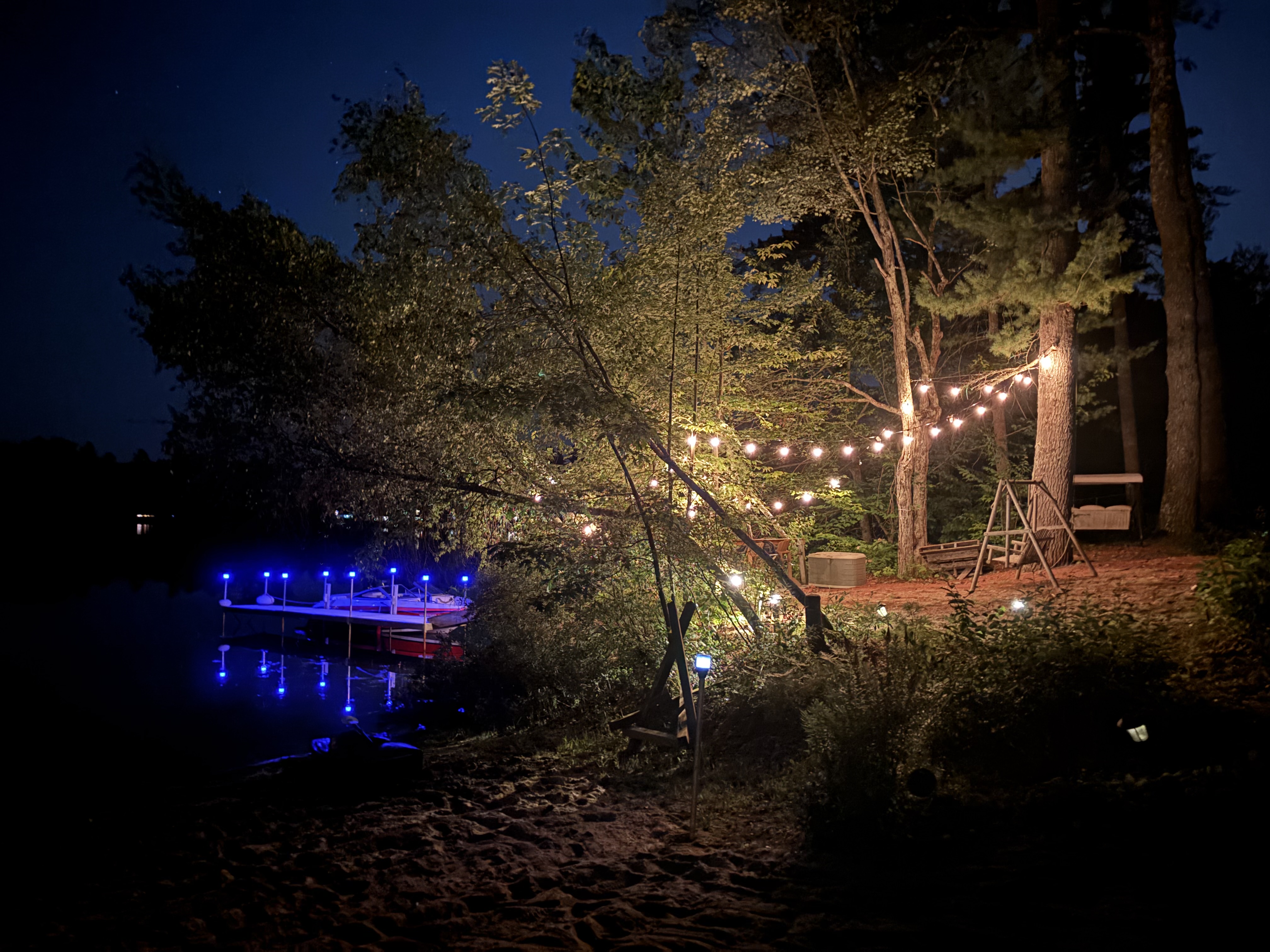
And right now, I’m sitting by the campfire at the lake. Solar lights glow on the dock, casting reflections across the boat. Strings of warm bulbs hang in the trees, giving the night a soft, golden hush. I hear laughter from across the water—other families, other friends, also trying to hold on to this fleeting season.

A cozy campfire burning in a stone fire pit surrounded by darkness, with glowing embers and flames reaching up toward the night sky.

And I’m lucky. Lucky to be here. Lucky to have a wonderful wife to share it all with.

This moment, right now… this one won’t slip away.

A serene lakeside scene at night, featuring a sandy shore, softly glowing string lights among trees, and a dock with blue reflections on the water.

The Real Reason Birth Rates Are Falling in the U.S.: It’s the Economy, Plain and Simple

“How can anyone but the top 10% even afford a child?”


I was listening to NPR the other day, and they were diving into the mystery of America’s declining birth rate. Experts offered a wide range of possible explanations—shifting cultural norms, delayed marriages, more women in the workforce, climate anxiety, even a rise in individualism. All interesting ideas, but I couldn’t help thinking: aren’t we ignoring the obvious reason?

When you strip away the sociological theory and high-concept analysis, the reason so many Americans are choosing not to have children—or to have fewer of them—is simple: it’s just too expensive.

Let’s talk about the basics.

Giving Birth Is a Financial Burden

Even giving birth in the U.S. is a luxury many can’t afford. The average cost of childbirth with insurance is around $3,000 out of pocket. Without insurance, it can balloon up to $15,000 or more. And that’s just for the delivery—never mind prenatal care, time off work, or complications.

Compare this to countries where childbirth is covered by universal healthcare, and it’s no wonder families in the U.S. are thinking twice.

It’s just too expensive to have a kid in the United States.

This isn’t some abstract cultural shift. It’s economics. Let’s look at the data.


🏥 1. The Cost of Giving Birth in the U.S.

Average Cost of Childbirth (2023):

Delivery TypeWith InsuranceWithout Insurance
Vaginal Delivery~$3,000~$10,000–$15,000
C-Section~$5,000~$15,000–$20,000

Source: Health Care Cost Institute, 2023


👶 2. No Paid Parental Leave


Only 24% of U.S. workers have access to any paid parental leave.

Source: OECD; U.S. Bureau of Labor Statistics, 2023


🧒 3. Childcare Costs More Than College

  • Massachusetts: $21,000/year (childcare) vs $14,000/year (college)
  • California: $17,000/year vs $11,000/year
  • National Avg: ~$15,000/year

Source: Economic Policy Institute, 2023


🏠 4. Housing Is Out of Reach

  • Median home price (2024): $420,000+
  • Median household income: $75,000

Source: Zillow; U.S. Census Bureau, 2024


📚 5. Public School Funding Gaps

If families manage to overcome the cost of birth, childcare, and housing, they’re rewarded with another financial stress: underfunded schools. For those who want quality education, private school tuition or expensive neighborhood buy-ins become the next hurdle.

And the list goes on: healthcare, college savings, groceries, transportation, extracurriculars. Every line item adds up, and most families are doing the math—and opting out.

  • Rich districts: $20,000+ per student
  • Poor districts: $8,000–$12,000 per student

Source: National Center for Education Statistics, 2023


🧮 It’s Just Math

Here’s the simple equation most working- and middle-class Americans are doing in their heads:

Cost of childbirth + no leave + $20k/year childcare + unaffordable housing + uncertain education = maybe no kids.

  • 2007: 2.12 children per woman
  • 2023: 1.62 children per woman (record low)

Source: CDC, 2024


🎯 It’s Not About Culture—It’s About Affordability

So while experts continue to theorize why Americans aren’t having kids, maybe the better question is this:

How can anyone but the top 10% even afford to?

This isn’t about people not wanting children. It’s about people being realistic. In a country where basic support systems are missing and the cost of living rises faster than wages, choosing to have children can feel like stepping off a cliff—financially and emotionally.

Until we address the economic reality of family life in America, the birth rate will keep falling. Not because people are selfish or scared or lazy—but because the math just doesn’t work.Until we create a society where average families can afford to raise children without risking economic ruin, the birth rate will keep falling. Not because people are selfish or lazy—but because they’re rational.